The pros and cons of die casting
Die casting gives fast cycles, smooth surfaces and tight tolerances, but needs costly machines and suits non-ferrous metals. Compared with plastics and sand.
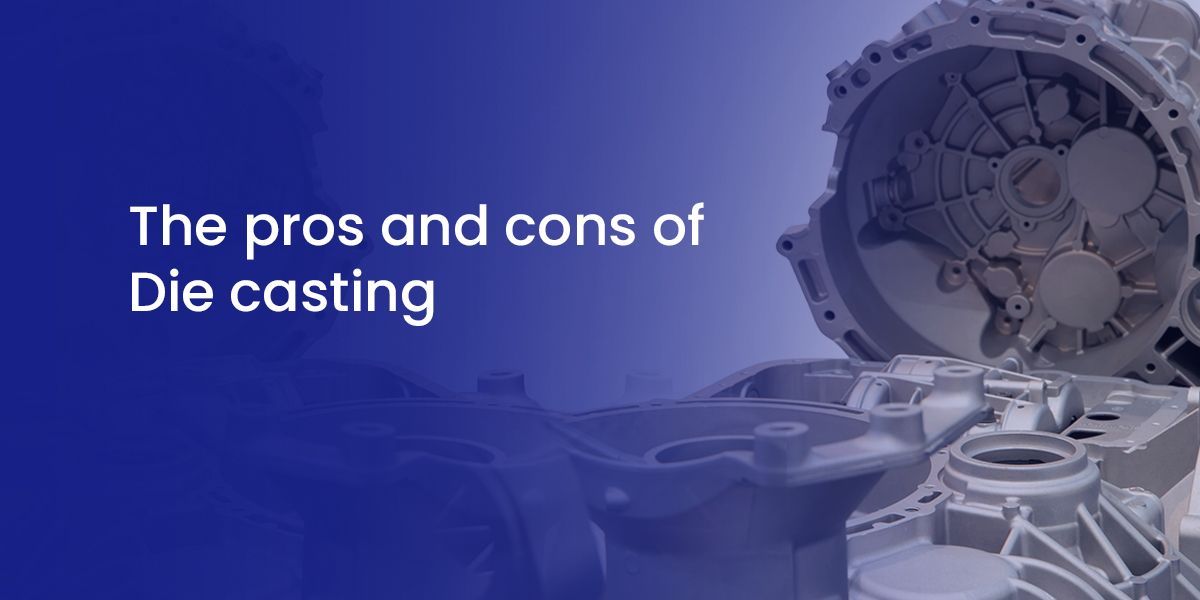
Casting manufacturers in India use one of the most inventive and adaptable metal casting procedures: “die casting.” In brass die casting, a mould cavity is used to shape the object, and high pressure is applied to the molten metal filling the cavity throughout the operation. The metal is heated and then forced into the mould cavity. In a casting factory, a new casting is produced as the molten metal cools and hardens.
Accurate brass die casting is possible because of its unique properties. Despite its reputation as a highly adaptable casting method, brass die casting has its own set of advantages and limitations, which are discussed further in this blog.
Die casting pros
Die casting supports many different metals and alloys. High ductility and strength make zinc a common material for this type of casting process in a casting factory. It is also very cost-effective, making it ideal for large-scale manufacturing. Aluminium, magnesium, copper, lead and tin are a few more metals and alloys that are supported in die casting.
Casting manufacturers in India need not be concerned with rough or rigid casting surfaces when using die casting. With the use of pressurised molten metal, die casting is able to produce castings with extremely smooth surfaces. To provide a super-smooth surface, the molten metal is pushed into the cavity and fills it completely.
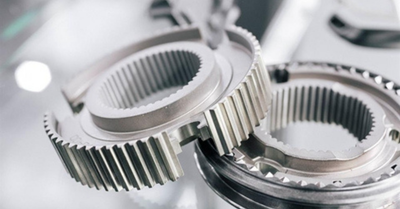
Brass die casting also has the additional advantage of reducing the number of finishing processes required. In other casting procedures, castings must be finished by machining. These additional machining procedures are time-consuming and cumbersome for casting manufacturers in India. Die casting, on the other hand, eliminates the need for these extra steps, and castings are ready to ship within a few hours of the casting process being completed.
- Quick lead time: A typical casting cycle in die casting is quite short. In fact, depending on size and material properties, it can be as little as a few seconds.
- Inexpensive: Die casting is particularly economical for large production batches. Over time, the cost per part becomes surprisingly low.
- Good mechanical properties: While not as strong as forged items, die castings offer great mechanical strength. The process can also produce parts with higher durability, hardness and conductivity.
- Complex details: You can make complex pieces in a relatively short time with die casting.
- Excellent precision: Die casting offers tighter tolerances than most other manufacturing techniques. It is therefore excellent for many delicate applications.
- Superior finishing: Die-cast pieces can be given a smooth or textured finish according to your requirements.
Die casting cons
Die casting, on the other hand, is a more expensive process than other methods of metal casting. It requires a specialised casting machine, which is expensive for most casting manufacturers in India to buy and maintain. When it comes to die casting, manufacturers can save money by using zinc as the casting material, but it is still a costly procedure.
There are also weight requirements for die castings that manufacturers must fulfil. The weight of a normal casting might range anywhere from one-tenth of an ounce to fifteen pounds. Defects occur if the casting is too heavy or too light.
Die casting can only support non-ferrous metals, which is a big limitation. It is not impossible to cast ferrous metal, but most producers avoid it because of the difficulty. Because of the large initial cost, many small businesses and start-ups cannot afford to use die casting.
Without proper design, die-cast parts are susceptible to flaws such as porosity and misruns. Die casting is not suitable for small-scale projects because most big vendors are not interested in taking them on. It can be more expensive than alternative options.
Comparison with other processes
Plastic injection moulding
Plastic injection mouldings lack the strength, stiffness, stability and heat resistance of die castings. Die castings outperform plastics on a cost-benefit basis by a wide margin. Plastics have a far lower level of long-term stability under load, whereas die castings are entirely impervious to UV rays, weathering and stress cracking in the presence of various chemicals. Die casting production cycles are substantially faster than plastic injection moulding production cycles. Plastics, on the other hand, may be inexpensive per unit volume, have intrinsic colour qualities that tend to reduce finishing, are temperature sensitive and are good electrical insulators. However, plastics may not be the best option for many applications.
Sand casting
Die castings can be made with thinner walls, all or nearly all holes can be cored to the exact size needed, and they can be held to much tighter dimensional tolerances. They are faster to produce in dies that make thousands of die castings without replacement, require less machining than sand castings, and have smoother surfaces and lower labour costs per casting. Sand castings, on the other hand, can be made from ferrous metals and from many non-ferrous alloys that cannot be die cast. Smaller quantities can be produced more cost-effectively by sand casting due to lower tooling costs and greater flexibility in design.
In conclusion
To summarise, die casting is a manufacturing method that uses pressurised molten metal to form items. The method has its own pros and cons, which casting manufacturers must consider when choosing a casting procedure. While it may be expensive, it offers advantages such as reduced lead times, smoother surfaces and many more.