What are the advantages and disadvantages of aluminium die casting?
Aluminium die casting offers mass production, strength, accuracy and smooth finishes, but brings casting stress, gas porosity and hot cracking. Learn more.
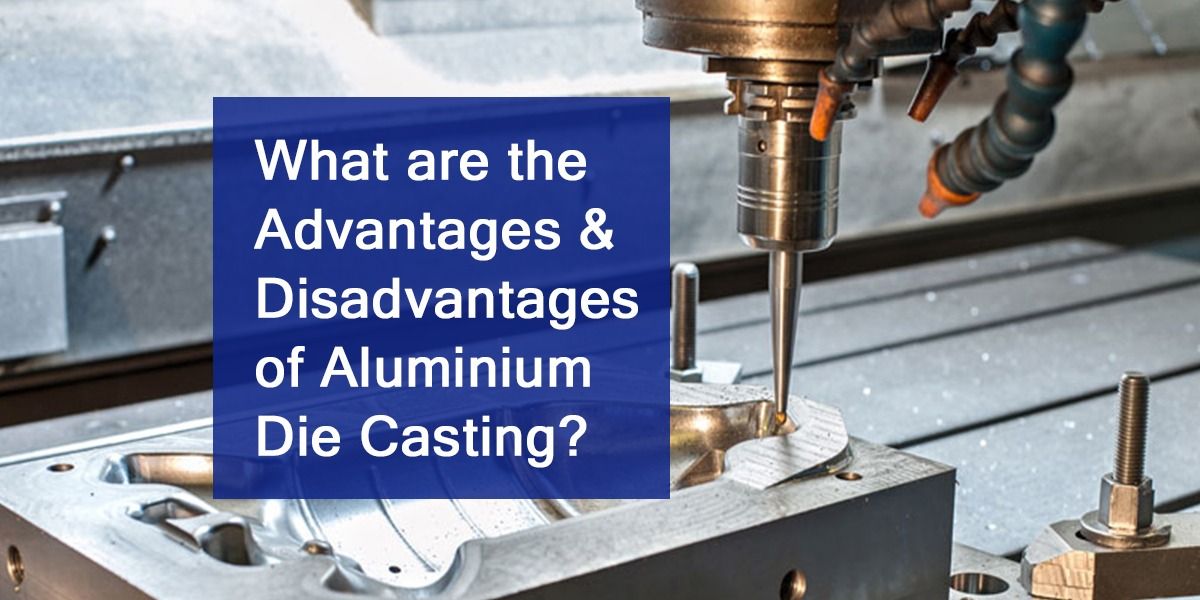
Aluminium is an excellent non-ferrous metal that is used for a plethora of industrial purposes. Owing to its low price and excellent electrical and thermal conductivity, aluminium is often processed to create new products.
One of the most popular processes conducted in the industry is aluminium die casting. From engine blocks and cylinder heads to bicycle frames and garden furniture, die casting is among the most beneficial industrial processes in the world.
Understanding the advantages and disadvantages of aluminium die casting can help you recognise the contributions of this dynamic process.
Advantages of aluminium die casting
- Mass production
One of the benefits of aluminium die casting is that it allows the production of several kinds of products. Since the products are obtained within specific shapes and tolerances, very little machining is required to produce thousands of identical castings.
- Strength and durability
A recognised aluminium die casting manufacturer will be able to vouch for the strength and durability of products created by the process. Die-cast parts are often significantly stronger than plastic injection mouldings of the same dimensions. The thin walls of the castings are also much lighter and stronger than metals used for other die casting methods.
Finally, the die casting process does not involve the fastening or welding of separate parts. As a result, the strength of the product is owed to the alloy rather than to the process of combining different components.
- Dimensional accuracy
One of the most widely appreciated benefits of aluminium die casting is that the parts produced are dimensionally stable. There are few notable differences between the dimensions of the mould and the final product.
The casting cycle begins when two or more die parts are clamped tightly together by a die casting press. This is followed by the injection of molten aluminium directly into the die cavity. Once this is done, the aluminium quickly solidifies.
The different die parts are mounted securely on a machine and arranged so that one part is stationary and the other parts are movable.
Another advantage of aluminium is that the final product is highly heat resistant.
- Cost-effective
Aluminium by itself is an affordable material that provides several valuable benefits (as described above). As a result, the process of aluminium die casting is extremely cost-effective, allowing the mass production of different kinds of products with minor investment.
- Smooth finish
Lastly, the aluminium die casting process allows the creation of products that have a very smooth surface. Therefore, if further coating or polishing is required, the surface acts as an excellent base that can be finished directly in the next phase of production.
Disadvantages of aluminium die casting
While aluminium die casting presents a plethora of benefits, there are also certain disadvantages associated with the process. These include:
- Casting stress
The airtightness of the cast aluminium alloy can be related to the properties of the alloy. Thermal stress can occur due to uneven section thickness at the intersection of different geometric shapes that are part of the casting. Phase-transformation stress is another type of stress that occurs during the phase transformation of aluminium alloys in the cooling process soon after solidification.
- Gas absorption
One of the main characteristics of aluminium is that it easily absorbs gas. The higher the temperature of the melt, the more hydrogen is absorbed. This results in the formation of pores (called “pinholes”) in the final casting.
- Hot cracking
Lastly, hot cracking is the occurrence of cracks in aluminium castings. This is primarily because the shrinkage stress of the casting exceeds the bonding force between the metal grains. These cracks commonly form along the grain boundaries.
Nevertheless, aluminium die casting continues to be a process that significantly influences production in the industrial sectors. Its advantages far outweigh the disadvantages of this lucrative procedure.
Aluminium die casting – the process
The aluminium die casting process involves a series of steps that are designed to produce tens of thousands of castings quickly and efficiently.
The casting process uses a steel mould, with the die made of a minimum of two sections. These separate sections of the die are designed to permit the easy removal of the final castings.
The die halves are then carefully separated by the machine and the final casting is ejected. Die casting dies can have complex mechanisms designed with the complexity of the casting in mind.
In special cases, aluminium die casting manufacturers use machines that are actuated by hydraulic cylinders to achieve the desired locking effect. Other manufacturers make use of the direct effect of hydraulic pressure to achieve locking.
Applications of aluminium die casting
Given the significant advantages associated with aluminium die casting (as mentioned above), there are several applications spread across a diverse range of industries.
Aluminium continues to be in significant demand owing to its high stability in complex shapes, excellent thermal and electrical conductivity, remarkable corrosion resistance and light weight.
One of the many industries to benefit from the aluminium die casting process is the transportation industry. With increasingly strict emission laws issued by government regulators worldwide, there is a growing need for more fuel-efficient vehicles in the market.
Another sector that benefits significantly from the aluminium die casting process is the building and construction industry (particularly in developing economies). The process is often used to create products such as fittings, shop partitions, prefabricated buildings, curtain walling fixtures, cladding and windows (among many others).
Finally, aluminium die casting products find a wide range of applications in the aerospace and aviation industry. This industry requires products that are lightweight and of high quality, created to lower the costs of airframe components used in the field. Aluminium also provides a significant number of advantages for aviation and aerospace purposes, making this process one of the leading manufacturing processes for the industry.
When choosing your aluminium die casting manufacturer, it is important to ensure that all necessary quality criteria are met. More information on the services and products provided can be gained by speaking with previous clients. This ensures that your investment in the service brings about significant market advantages.